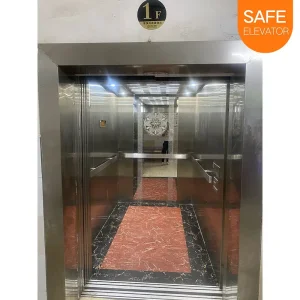
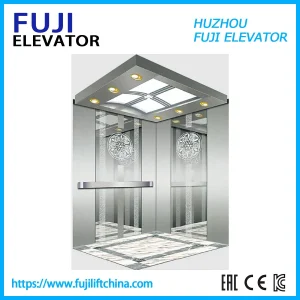
The global elevator industry is undergoing a paradigm shift where aesthetics are no longer secondary to functionality. As urbanization accelerates, particularly in the Asia-Pacific and Middle Eastern regions, the demand for high-end, customized OEM/ODM Etched Steel Elevator Doors has reached an all-time high. Etched steel represents the perfect intersection of metallurgy and artistic design, providing architects with a durable yet expressive canvas to define the identity of modern structures.
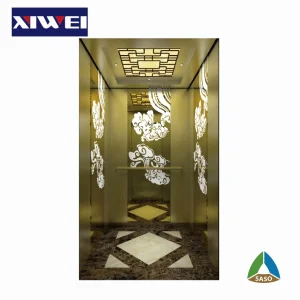
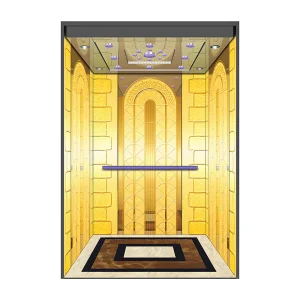
Currently, the industrial application of etched stainless steel (primarily Grade 304 and 316L) spans from luxury hotel lobbies to high-traffic commercial hubs. The process involves sophisticated chemical milling techniques that create intricate patterns, textures, and even logos directly onto the steel surface. Unlike traditional engraving, etching allows for micro-precision depth control, ensuring that the structural integrity of the elevator door remains uncompromised while achieving a tactile, three-dimensional visual effect.
Leading factories and exporters in China are now leveraging Industry 4.0 automation to provide bespoke ODM services. This enables real-estate developers to integrate "Semantic Design"—where the patterns on the elevator doors reflect the cultural or geographical context of the building's location. For instance, geometric patterns reminiscent of Islamic art are trending in Dubai’s skyscrapers, while minimalist, brushed linear etches dominate the Nordic market.
The core of superior etched steel production lies in the Photo-Chemical Machining (PCM) process. Unlike mechanical stamping, which can induce stress on the metal, PCM uses UV-sensitive photoresists to mask areas of the steel, followed by acid immersion to dissolve the unexposed surfaces. This allows for complex designs that would be impossible to achieve through CNC machining alone.
In high-end elevator door manufacturing, the etching depth is usually controlled between 0.03mm and 0.1mm. If the etching is too shallow, it loses visual impact under lobby lighting; if too deep, it can trap dust and pathogens, becoming a maintenance liability. Advanced OEM providers now use Nano-Anti-Fingerprint (AFP) coatings post-etching, which fills the microscopic valleys of the etch to prevent oxidation and simplify cleaning in high-traffic commercial environments.
Physical Vapor Deposition allows for colors like Champagne Gold, Rose Gold, and Black Titanium to be fused into the steel at a molecular level.
Combining hair-line, mirror, and cross-hatched finishes within a single etched pattern for multi-layered reflectivity.
Modern factories utilize closed-loop acid recovery systems to minimize environmental impact, aligning with LEED certification requirements.
Looking toward 2030, the "Smart Elevator" trend is merging with material science. We are seeing the emergence of Integrated LED Etching, where semi-transparent etched patterns allow backlighting to change color based on the time of day or the lift's status. Furthermore, the "User Intent Mining" in design shows a move toward bio-mimetic patterns—designs inspired by nature that have been proven to reduce anxiety in passengers within confined spaces.
Another significant trend is the Localization of Design. Global exporters are no longer shipping "one-size-fits-all" products. ODM providers are working directly with local architectural firms to ensure that the door aesthetics comply with local safety standards (such as EN 81-20/50 in Europe or ASME A17.1 in North America) while satisfying regional aesthetic preferences. This "Glocal" approach is the key to succeeding in the competitive export market.


Custom Lifts That Suits Your Need
Ascom Elevator is a professional Elevators Manufacturers and Suppliers in China, Fuji Lifts & Elevators. Our company mainly covers Passenger elevator, Home elevator, Sightseeing elevator, Cargo elevator, Escalator, Shopping cart escalator...


 Ascom Elevator